Showing posts with label ETM Manufacturing. Show all posts

Friday, October 28, 2016

The Challenge for Sheet Metal Fabricators when Using the “Best-Case” Scenario for Planning

Joe has done an amazing job taking over a company that was in trouble and getting it solidly back on track. His laser focus on product quality and customer service has helped him triple his customer base and increase his revenue tenfold. He has outgrown his manufacturing space – twice in the few years that Joe has been a customer of ETM Manufacturing. As you might expect, Joe has had his challenges.

Recently, we accepted an order from Joe and production has been delayed waiting for tooling and artwork release. Despite the delay caused at his end, Joe’s customer still expects ETM to deliver his order on time because he now finds himself up against a shipping deadline that could put his reputation on the line.

As sheet metal fabrication suppliers, we are often caught between Joe’s struggle to deliver to his customers, and our struggle of delivering to him despite not having received everything we needed on time from him. What can Joe do to make sure we get the parts to him as fast as possible so that he can get that shipment to his customers within reasonable time?

Here are a few options he can choose from:

Option 1 – Inform the Customer that the Shipment will Be Late

While delivering bad news is never easy, informing the customer up-front provides the customer with more time to plan for the delay. With this option, parts are not rushed, inspection is not rushed and quality parts will be shipped. Expediting costs such as overtime will also be avoided. There’s only one but a rather colossal downside to choosing this option: Joe’s reputation of providing great customer service might suffer considerable damage.

Option 2 – Spend ‘Whatever It Takes’ to Ship On-Time

This option involves throwing money at the problem, which covers unlimited overtime and offers to expedite. While this may sound good in theory, to my surprise, very few employees want to work a lot of overtime. Maybe this is a part of their family values or could be a direct result of millennial priorities affecting work. In some cases, employees that are already working overtime, reach their maximum working capacity. The same is true for expedite fees. Many companies are happy to help when they are not busy, but afraid to promise to expedite because they may not be able to pull it off. How would you feel not receiving your order on time despite paying a higher price for faster delivery?

Option 3 – Call In Your “Favors”

Sometimes this involves a simple phone call to a senior manager to remind him or her of the long-term relationship you’ve shared with them and what this means to the relationship. Sometimes it is the promise of additional business (i.e., if we ship this on-time, there is all this other business we can win). Sometimes an emotional plea could do the trick. We are all familiar with these tactics, maybe used them ourselves, but we also know that they can only be effective if used infrequently because there’s only so many times Joe can pull out a wild card!

Option 4 – Manage Your Suppliers

In some cases, customers ask us for our best possible timeline and we stretch to give that to them. This is typically followed up with a request to update the schedule daily (or even multiple times a day). We are all aware that micromanaging demotivates our employees, and the same is true for custom sheet metal fabricators. It feels like we are being “punished” when asked for daily updates because they interrupt our momentum in producing parts, when we are essentially busting our butt recovering from a time delay we didn’t cause. This discourages us, as suppliers, from providing Joe a best-case scenario, just to avoid the daily update “beatings.”

In working with your suppliers, haven’t you all been in Joe’s position at some point or the other? Delays happen, they could be inevitable at times, and you may not even be directly responsible for them. But, ultimately what matters is – were you able to successfully deliver the order to your customers, albeit a little late?

In Joe’s case, he has done a reasonable job of using all of these options in a way that works best for him, his customer, and his supplier. He has already reached out to his customer to let them know there was a week’s delay but he is constantly working to reduce that delay. He has offered to pay expedite fees for delays that his company has caused. He has called in favors with his anodizer to help expedite something that would normally take us longer to achieve. And, he is helping us make decisions as and when they occur so that there is very little time delay in production. His courses of action clearly explain why he has been growing so successfully.

ETM Manufacturing is dedicated to helping our customers remain competitive by providing products, services, and support for companies who want more from their supply chain management consultants.

Want to learn more about fostering supply chain trust? Download our free eBook on Improving Trust in Your Supply Chain.


from ETM Manufacturing http://etmmfg.com/3780

Monday, October 17, 2016

Why Seeing a Sheet Metal Specialist Matters

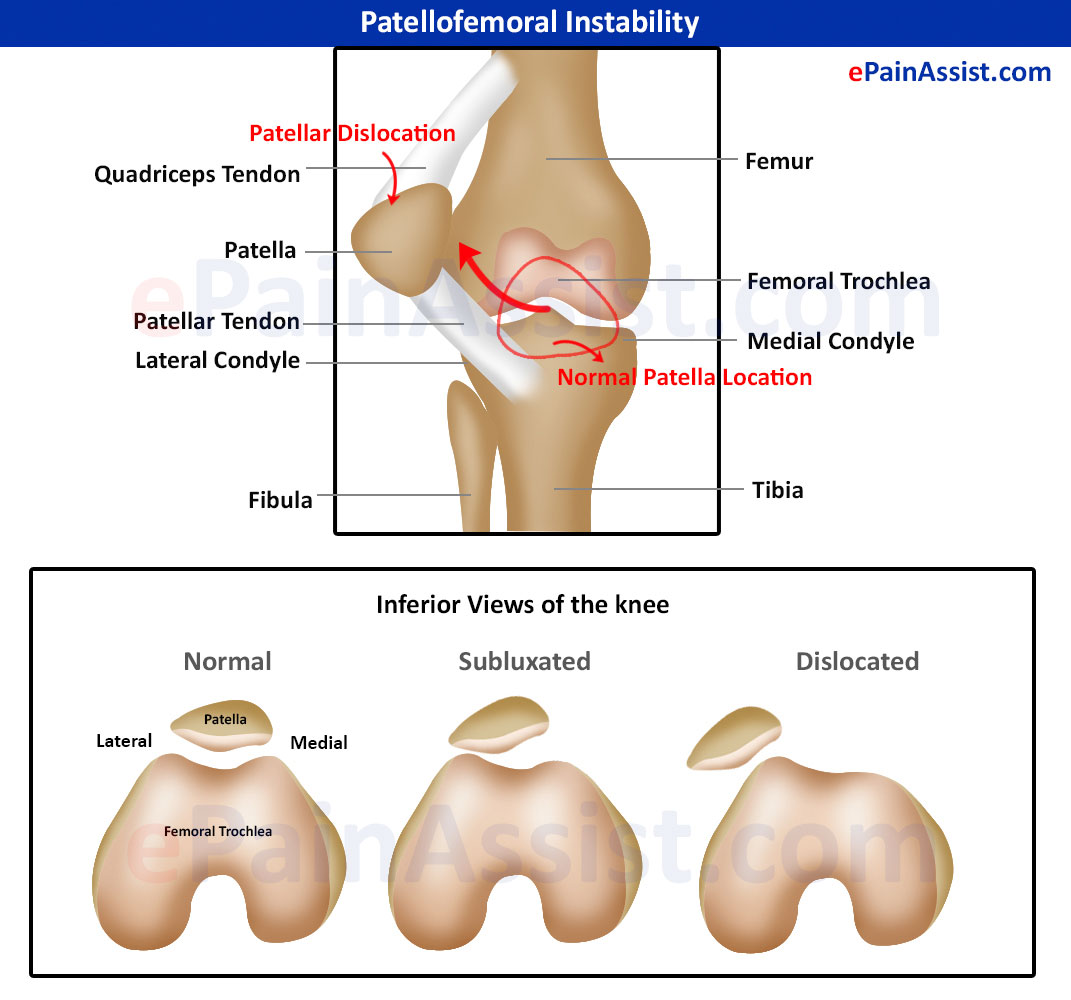
Getting a good solution to patellofemoral syndrome is as hard for custom sheet metal fabrication!

Getting a good solution to patellofemoral syndrome is as hard for custom sheet metal fabrication!

My youngest daughter has the fortune of having inherited many of her mother’s lovely traits, but the misfortune of having been diagnosed with patellofemoral syndrome (PFS), which results is some sharp knee pain when she is running or climbing steps. This can be very tough for a future varsity cheerleader. The first doctor told her to take it easy—that it would get better. The second doctor prescribed a 12-week regimen of physical therapy—that didn’t work. Finally, we got a referral to Dr. Vorderer, a specialist with Children’s Hospital at Waltham. The answer: orthopedic inserts, but unfortunately, it took six months to get that answer. And we know we aren’t alone! I see this scenario play out repeatedly in our sheet metal fabrication business as well. It’s a different kind of pain, but can hurt your business just the same.

Stuck in a Painful Rut?

Some simple questions can help diagnose if you have a problem with your sheet metal fabricator.

  • Have you had repeated problems with a sheet metal part from the same supplier?
  • Have you stayed with your sheet metal fabricator through repeated problems and incidents?
  • Have you kept count and documented how many times you had a problem?
  • Has that sheet metal part been giving you pain for six months or more?
  • Have you considered seeking a sheet metal specialist?
  • Are you confused when trying to establish what kind of sheet metal specialist you need?

Seeking a Specialist

If you’ve struggled with the answers to any of the questions above—you might consider a second opinion … from a custom sheet metal fabricator. Biased, yes, but with good reason! Custom sheet metal fabrication is what we do and we are often the go-to solution for people who have the pain points described above.

At ETM Manufacturing, we inherit our fair share of “problems” with customers bringing us their problem parts from other suppliers. When this happens, here is how we help our customers:

  1. We tell you up front if this is a problem part and whether we think we can make it.
  2. If we can’t make it, we’ll let you know if it can be made and who specializes in how to make it.
  3. If you are open, we’ll also suggest design changes to improve its manufacturability.

Investing in Future Wellbeing

We’ll also dig deeper to see what resources our customers may (or may not) have at their fingertips to help assess relevant capabilities and options based on their needs. There are several times when we’ve visited a customer’s engineering department to educate their team on roll forming or tube bending (we do neither) so they can save money and ramp to production. Why? Of course, we want our customers to be successful, and if our customers are successful, we believe more business will come to us as well. Think about my daughter: if her original doctor had set her up in orthopedic inserts, it would have saved her five months of pain and she would have stayed with this doctor for the rest of her life. Unlike her original doctor, we want our customers for life.

ETM Manufacturing is dedicated to helping our customers remain competitive by providing products, services, and support for companies who want more from their supply chain management consultants. Whether or not you have a problem, we’d be happy to discuss your sheet metal fabrication needs with you. Contact us and we can help keep your pain prognosis at bay.


from ETM Manufacturing http://etmmfg.com/3770

Thursday, October 6, 2016

Tech Tip: How to get a rounded edge on a sheet metal part

closed-vs-open-hem

Hi Everyone! This is Clint, your Sheet Metal Fabrication Technical Manager.  We had an interesting sheet metal RFQ come in that I wanted to share with you.

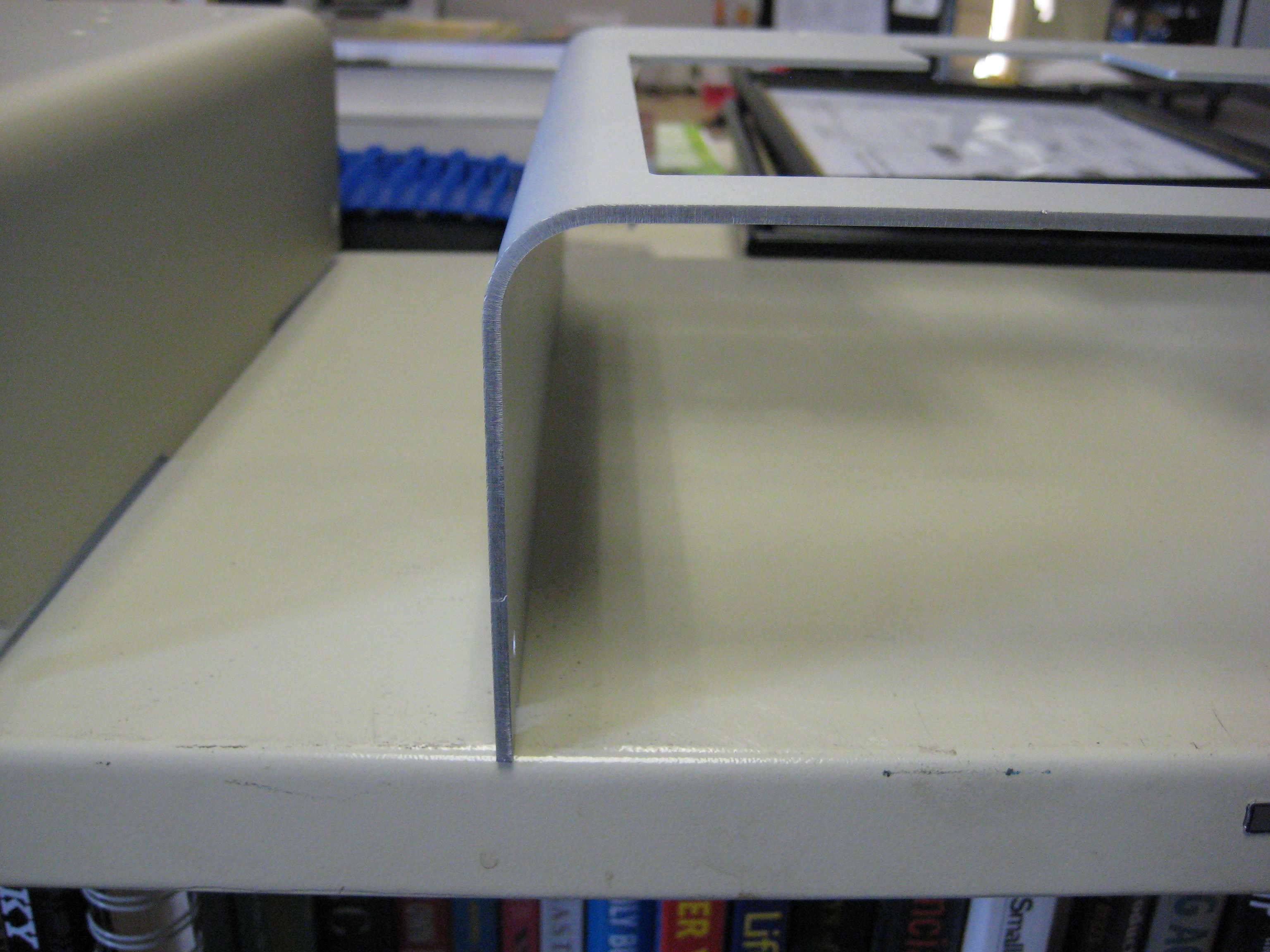
Have you ever had an application where you needed a sheet metal part with a curled edge? Sometimes customers want that rounded edge for extra thick edges, sometimes they want that thick edge to interlock with another part, and sometimes they want to use that opening in the rounded edge.  In the sheet metal world, we call that rounded edge a “hem” and they come in 2 basic styles – a “closed hem” and an “open hem”.

Us sheet metal fabricators can make this kind of sheet metal feature pretty easily. We take a flat piece of metal and form it into an angle, then come down again on the angle to close it on top of the flat piece.  If we want a closed hem, we come right down on top of the flat piece.  If we want an open hem, then we come down on top of a spacer (an extra piece of metal the thickness you want the opening), then we slide out the spacer.

The tricky bit for any sheet metal fabricator is when you want the sheet metal we’re forming to be thick. Generally any sheet metal over 1/8” thick could have micro-cracking on the outside of the rounded edge (aka the outside of the hem).  Steel parts generally have less issues with micro-cracking than aluminum.

For you sheet metal engineers, these micro-cracks occur because the inside of the hem is under compression and the outside is under tension. Once the bending force exceeds the yield strength of the material (necessary to bend any sheet metal), you’ll get these micro-cracks.  The part works fine, but if you look close enough, you’ll notice them.  Plate the part and you’ll notice it more.

All sheet metal comes with a grain from the processing mill, so we can reduce any micro-cracks if we form the hem opposite of the grain. Yes, you could probably reduce the micro-cracks if you heated the tool or the sheet metal (yes, we have been asked that!), but please don’t ask.  Controlling heat for consistency is difficult and could be dangerous.  A better way for a sheet metal fabricator to reduce micro-cracking is to make the hem incrementally, by using multiple hits on the press brake tool (a.k.a. “bumping”) to gradually form the radius.

Going into production with a design feature like this? There is help!  This feature is common enough that the punch press tooling companies have special tooling that can form these hems in the punch press.  So much faster and so much more consistent than doing this in the brake!  There are some exceptions – this really only works for thicknesses 0.062” or less and your part geometry needs to allow space for this tooling to work. As always, give me a call and we can help you through it.  My number is 978-486-9050.


from ETM Manufacturing http://etmmfg.com/3755

Tuesday, October 4, 2016

What are your sheet metal fabricators doing with their profits?

Vernon Cancer Center at Newton Wellsley

Last weekend my family and I had the pleasure of walking in the rain to support the Vernon Cancer Center at Newton Wellesley Hospital.  My wife works there and I have heard so much about all the great work they do to help patients recover or treat their cancer.  Every year, the hospital hosts an event, Hope Walks, as a fundraiser for the Cancer Center and it is a great way for patients and caregivers to support something so dear to all of us.  Sunday’s keynote speaker, Melody Tortosa, originally help fund the Cancer Center and has recently been a patient at the Center.  This year alone, we raised over $225,000!  As the owner of a Boston sheet metal fabricator, I couldn’t help wonder “What do they do with all that money?”

We’ve all heard about the expense of American medical treatment, so I was really thinking, “Aren’t they charging more than enough to cover their expenses?” I learned on my walk that, “No”, they really aren’t able to cover their expenses.  The why was very interesting to me.  It turns out that Medicaid/Medicare reimburses a fixed amount for a certain diagnosis.  Supplemental health insurance covers more but maybe not all of the expenses for a diagnosis.  Beyond numbers, every visitor to the Vernon Center Center is human – with different pain thresholds, different reactions to their treatment and different effects on other illnesses the visitor might have.  The fixed amount may be more than enough for the visitor with a high pain threshold and no complications, but less than enough for the visitor with a low pain threshold and many complications.  What do you do in that case?  What if YOU were that case?

For the Vernon Cancer Center, they use the Hope Walks funds to provide non-covered services for the visitor that needs more support than the fixed reimbursement amount allows. Examples include a Patient Navigator to help the visitor understand where and when to go for help, assistance for parents that are faced with a cancer diagnosis in their children, as well as tons of psychological, physical, social and educational support for folks struggling with a potential life taking illness.  Who knew that wasn’t covered?

In sheet metal fabrication, believe it or not we are faced with the same thing. The appearance of clean looking engineering drawings and standard costs give us all the impression that our standard pricing and lead time will be good enough for every part.  The truth of it is that some parts are more difficult than others to make (i.e., some parts require grain direction a certain way, but that is never called out on the drawing) and some parts have more complicated supply chain paths than others (i.e., parts that require a special anodizing process and then laser etching with another supplier).  As a sheet metal buyer with hundreds if not thousands of parts being sourced, how do you know which part is going to cause your heartburn and which one will end your career?  You don’t; you need someone who has the extra resources to get you out of jam even though no one expected any problems on that part.

At ETM Manufacturing, we have our own version of Hope Walks – it’s called our annual profit. Every day we give that profit back to our customers who got in a jam because none of us knew there would be an issue.  At the end of the year, if there is any left over, we buy equipment to help our customers grow, we reward our employees so they stay to help our customers, or we pay down our debt so we can be around for a long time to help our customers.  No golf club memberships, no second home at the Cape, no amazing vacations, no filet mignon dinners and caviar wishes.  All of it goes back to you, one way or another.

So, what are your sheet metal fabricators doing with their profits?


from ETM Manufacturing http://etmmfg.com/3746

Monday, September 26, 2016

14 Brave Souls

14 Employees Take White Belt Tarining

Last month 14 brave souls turned off their machines, put away their tools and went into the classroom to get their “White Belt” certification. If our employees are truly committed to lean manufacturing, the white belt certification is their first step towards becoming a lean expert.  Intentionally, we do not compensate any of our employees for the training.  They chose to get the certification because they know it is the right thing to do for our customers.  I am incredibly proud of them.

Every year we survey our customers and the results amaze me. Customers love our quality, but what they really want is great customer service.  When we probe them on what great customer service means, we get different answers.  “I need someone to return my phone calls quickly, “ is one type of reply.  Others say it differently, “What can you do to get me the parts more quickly?”  The comment that sticks with me 5 years later is “What can you do today to get me parts better, faster, cheaper?”

For the past 10 years, we don’t have anyone asking for ISO9001, but our sheet metal customers all want “better, faster, cheaper”. Lean manufacturing is the only way we know to do this without cutting our employees’ wages or buying older equipment.  Our employees know this too.  They know if they don’t invest in themselves, and the company, to improve every day, our customers will move the business to another sheet metal manufacturer that has improved.  This has already happened to them.

Back in 2010, our company had a great run with a customer that resulted in huge profit sharing bonuses for every employee working for ETM. People started making plans for those bonuses to come every year.  In 2011, we launched an effort to help cost reduce our big customer’s product and we were successful – reducing product cost by almost 50% and cutting packaging costs by more than 50%.  The result was another year of record breaking bonuses.  But then we got lazy.

In 2012, our customer was faced with strong competitive pressure and we had not invested enough in training to help them fight their battle. Reluctantly, our customer had to shift most of the business to a Midwest fabricator and the large bonuses did not repeat that year.  That was a hard lesson to learn for all of our employees.  We can be a victim to competitive forces or we can help control them.  By taking the initiative to improve themselves and our operation, ETM can be the competitive force that drives business (and jobs and overtime) toward our employees, not away from it.

Our lean efforts are paying off. This year alone, we have 3 new customers from outside our typical territory that are paying a premium in shipping because our lean product costs and efficient delivery are worth that premium.  Our next step is to invest in “Yellow Belt” certification and then again for “Green Belt” certification and finally in “Black Belt” certification.  Can you image what a team of black belts could do to improve your competitive advantage?  They can.


from ETM Manufacturing http://etmmfg.com/3739

Wednesday, September 14, 2016

Are You Ready For The Election? We Are.

presidential-cycle

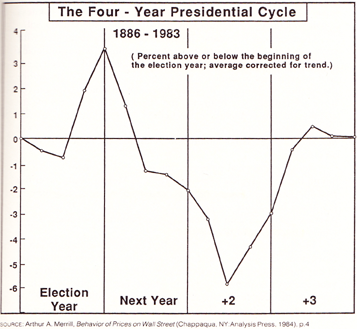
Every year about this time, most New England sheet metal fabricators start to slow down. Some slow down earlier, some later, but we are all customer driven and customers don’t like lots of inventory at the end of the year.  In an election year, there is additional uncertainty and many customers reduce sheet metal orders even more than usual.  Did you know people actually track the “Presidential Cycle” for the stock market?

After running this business for almost 10 years, I have learned to plan for this down cycle, but there are some things you should know to benefit your business. First, check your pricing late in the year or early into the next year.  Some sheet metal suppliers might be more willing to lock in lower prices if it can improve their backlog.  Second, if you have steady business throughout the year, your business is very desirable.  If lower price isn’t as important, then make sure you get the right service that you are paying for.

Here is what we are doing to get ready for the next presidential cycle:

1. Increasing cross training. Our customers need flexibility and responsiveness in their sheet metal supply chains. The more cross trained we are, the more flexible capacity we have. In most cases we can TRIPLE our capacity overnight to support a surge in orders. This also means when orders drop we can quickly shift resources to other parts of the shop.

2. Reducing slow moving inventory. Most sheet metal business owners know that slow moving inventory is “sleeping money”. By using up our slow moving inventory we free up cash without affecting customer delivery dates. In fact, our costs can go down as we use older, some times less expensive material.

3. Improving productivity. Not only have we invested in technical training, but we are also investing in productivity training. In the last 7 weeks alone, we have implemented 9 improvement projects, trained 20 sheet metal fabricators as lean white belts, and implemented an issue resolution board to troubleshoot issues early.

No matter which candidate gets elected, we will have a new president and that will mean market uncertainty. It is hard to argue with a 100 year trend.  We think the best sheet metal suppliers for our industrial customers are the ones that accept that the next 2 years are going to be flat and prepare for that.  If things improve sooner, our cross training and productivity efforts will only help.

Need help preparing? Contact me at 978-486-9050.


from ETM Manufacturing http://etmmfg.com/3728

Thursday, September 1, 2016

The Dangers of Using Anodized Surfaces for Cosmetics

Anodized Sheet Metal

This week we have been battling with our plater to improve the cosmetic quality of the anodized sheet metal parts that he is supplying us. The problem is that it is a losing battle – for both of us.  I first heard of anodizing aluminum parts as a low cost coating for corrosion protection in the electronic sheet metal chassis.  It costs less than powder-coating and provides much of the same protection.  It doesn’t peel or chip.  It can even come in a variety of colors.  For protecting surfaces, it does a good job; the problem is when people start to use it for cosmetics.  They want cheap paint, but there are a number of challenges:

1. Anodizing does come in a variety of colors, but the number is limited and the color can vary from lot to lot.

The important thing to remember is that your anodized parts are dyed the color you want. Just like your kids’ Easter eggs, the color saturation depends on the amount of die as well as the duration your parts stay in the tank.  Small variations in die or duration lead to color variability.  To compound this, the residue that comes off the anodized part into the die tank can slowly change the color.  Deep colors hide some of this better than light colors, but if you are looking for color consistency, powder-coating is a better option.  This variation issue is compounded if you want lot to lot consistency since die tank composition and timing might vary slightly from shift to shift.

IMG_5367

2. Anodizing reflects the base material and its defects.

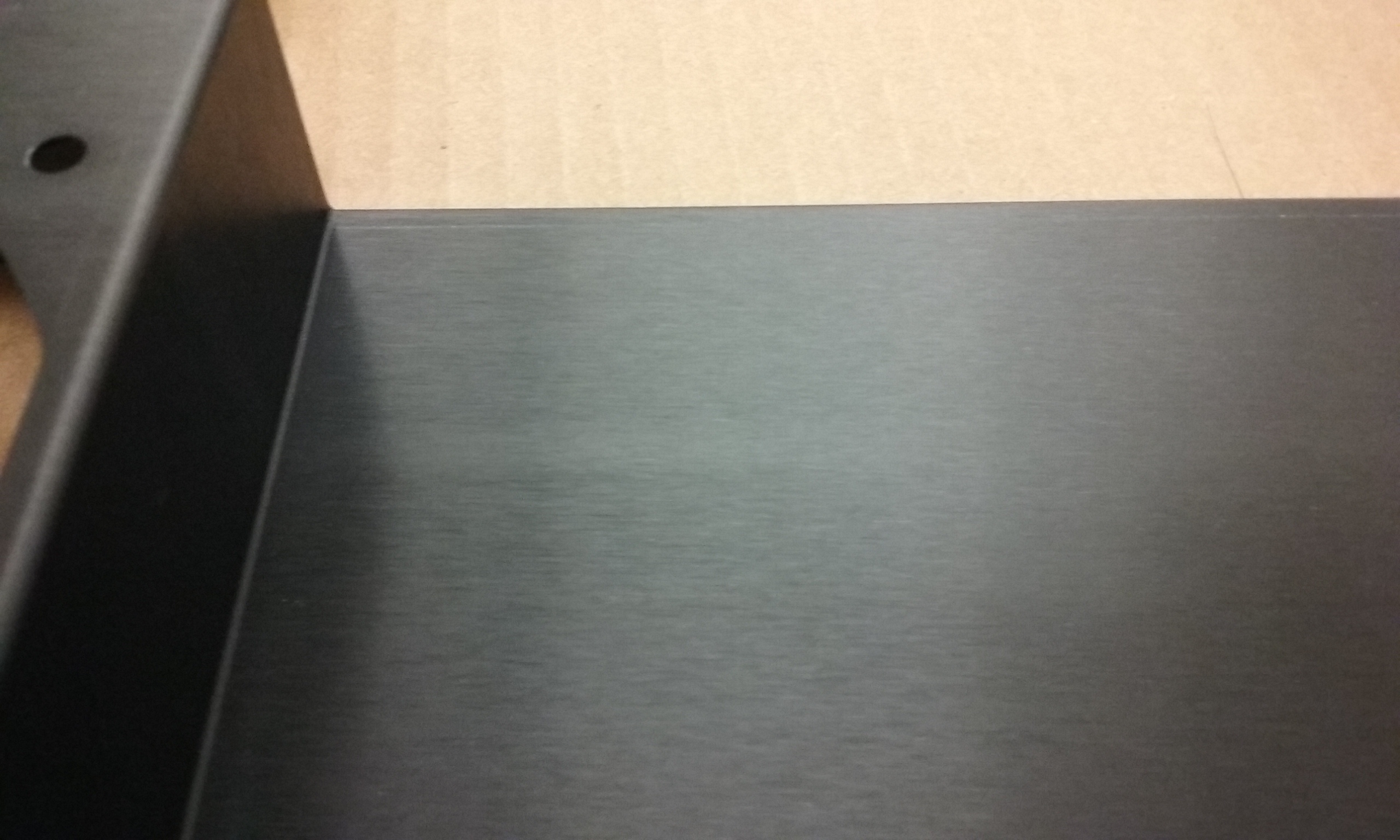
Because the anodizing process actually etches the base material and creates a film or coating on that surface, the final coating surface reflects the quality and consistency of the base material. In most cases, our platers use a cleaning process so any shop oil or residue is removed, which provides a good anodized cosmetic.  Sometimes the cleaning isn’t 100% and the final part cosmetics are affected.  Other times hardware is installed on the opposite side (or tack welding is performed).  In these cases a shadow will be visible on the cosmetic side.  Bear in mind that the coating is 100% functional, however, it may not meet the cosmetic needs required.

Surface Defect

3. While anodized surfaces do not peel or flake, they do scratch.

Anodizing provides a thin layer of protection, so anodized parts can get scratched easily. We send all of our parts out with extra protection and they are returned protected, but if these parts are around things like screws and screwdrivers, scratching can happen.  We’ve even had issues with the divider paper between parts abrading the parts during transportation (like light sandpaper) and had to reject an entire lot.  The same thing is true for cardboard boxes and anodized parts that fit too snuggly into them.

Scratched part

So what happens when your industrial designer really, really wants that anodized look, but you are really worried about all the product claims due to scratched sheet metal parts? One option is to clear coat the anodized part.  The texture is not the same, but you have much better scratch resistance.  Other times, we’ve had customers switch to powder-coating and they found a color/texture solution that gave them that special look without the headaches of dealing with lots of scratched rejects.  Bottom line – when you are choosing anodized surfaces in a cosmetic sheet metal application, remember that extra handling and extra parts are also part of the costs.

If you want to see more examples or learn more about reducing the risk, please contact us at 978-486-9050.


from ETM Manufacturing http://etmmfg.com/3717

Friday, August 26, 2016

Out With The New, In With The Old

childs-with-work-helmets_1149-678
Designed by Freepik

Every year about this time, we say goodbye (temporarily) to the students who have worked for us over the summer. This year, Cole Pittman, will be returning to Acton-Boxborough High School for his senior year and Nick Murner, will be returning to UMass Amherst for his sophomore year.  Our sheet metal and assembly areas have been busier this summer than we were expecting, so some former ETM employees have come back part time to fill the void left by Cole and Nick.  This is a great way to support our local community while providing young people a chance to experience a manufacturing environment.

A lot has been said in our industry about our inability to attract young, bright workers to manufacturing – particularly sheet metal fabrication – because of the perception of it the antiquated perception of it being dirty and loud.  Without young people entering manufacturing, the pipeline is drying up for manufacturing lead, supervisors and managers.  As a result, 613,000 open positions are predicted for GM and Ops Mgrs over the next 7 years.  We need to act now if we are going to have viable local manufacturing tomorrow.  And, if you’ve read other blogs of mine, you know that manufacturing exports are one of the few ways we can increase the quality of life in our communities.

One way we encourage this is by hiring college and high school students over the summer, but we also work with our local Vocational High School. For the past several years we have been hiring juniors and seniors from their sheet metal welding classes to work part time at ETM Manufacturing under the guidance of our lead welder.  We like to hire 2 students together and they job share (vo-tech typically is 1 week work, 1 week classroom, so the 2 students alternate).  The students love it because they get real world experience (plus a good paycheck) and we love it because we need the help & we can screen for future full time hires.  We typically hire about 50% of the students into full time positions.

This year we are upping our game and engaging Seniors from UMass Amherst this fall semester to help us develop the next generation of light weight bakery carts. We already have a new hybrid design that save 15% weight and is 2x as strong.  With their help, we hope to get another 10% weight savings and improve cart strength by another 25%.  The students will get a chance to test the existing design and then work with our sheet metal engineers to design, build and test the new design.  It should be a lot of fun and give these budding engineers a real taste for manufacturing.

If you have other ideas we can work with the local community to promote sheet metal manufacturing interest, please let us know! 978-486-9050.


from ETM Manufacturing http://etmmfg.com/3711

Thursday, August 18, 2016

The Challenge With OEM Approved Powder-Coaters

Powder Coat Sample

Have you ever stood by helplessly as a disaster unfolds in front of you. You stare in horror knowing nothing you can do or say will change the events.  This week we are watching helplessly as a disaster hits our customer and there is nothing we can do.  Schedules are delayed, costs are escalating, and everyone is frustrated – including us.  The sad part is that this could all be avoided.

Many months ago we were approached by a new customer with the opportunity to build sheet metal production for them. This is nothing new, but we were of course honored.  The only problem is that the customer approved a powder coater based in Wisconsin.  “What there a special material or a special process?” we asked.  “No, another division approved them, so we are going to use them.” they replied.  We even asked if we could qualify a second source and the customer was not interested in taking the time or energy to do that.

So sheet metal prototypes were made, sent overnight at the customer’s expense to the powder coater, and the assemblies were qualified. We were then released to build production and we knew there was going to be a problem when we saw the pallets of parts to be shipped to Wisconsin.  No way could our customer make money shipping back and forth here to Wisconsin.  Not to mention the additional week in transport costs.  Finally we all agreed to have the powder coater individually wrap and box the units, saving time and maintaining quality.  Or so we thought.

The first production shipment from the powder-coater was a disaster. Everything took longer than expected and when the individually boxed parts arrived, everything had to be taken out and inspected (more $$$).  Guess what happened – many failed our inspection.  Now our customer’s shipment is in jeopardy and the rejected parts have to get shipped back to Wisconsin for strip, recoat and return (more $$$).  There has to be a better way.

The next production run, at our expense, we sent our engineer to the customer’s approved vendor to inspect the lot. He found more rejects but at least this time the parts were fixed before the lot was shipped out.  We also took the vendor out of the individually boxed requirement to make is easier for them.  During shipping, still more damage occurred and another return, repair, re-ship sequence ensued (more $$$).  What a disaster!

Luckily we had the foresight to send some earlier sheet metal samples to a local powder-coater who agreed to power-coat them on the hopes of getting qualified. Once the quality issues started happening, our customer was motivated to qualify our source and just last week he was approved.  This supplier has local pick-up and delivery plus a proactive staff that will call if they are at all worried about quality.  Finally we can all sleep at night without the nightmares.


from ETM Manufacturing http://etmmfg.com/3708

Friday, July 15, 2016

First Impressions May Be The Wrong Ones

Yesterday afternoon, Linda Carroll, our accountant, was out of the office and I found myself answering phones like in the old days. It is unbelievable how many cold calls we get – almost 10 an hour!  About a third of them are from robotic dialing machines with automated voice prompts (who answers these?).  The rest of the calls are from poorly trained people with little interest in helping us.  Every time I answered the phone, it was a reminder about how our customers and prospect must feel.  They are probably getting 80 calls a day (or deleting 80 voicemails a day).  This is on top of the 100+ email solicitations they must get every day.  How can we help them?

The easiest way to help is to stop calling them. They don’t get bothered, but they also don’t get helped.  So our first job is to hear if they need help.  Sometimes a simple question gets the answer, but sometimes we just hear the complaints.  If we do our job right, we just need to listen for their mood.  If they are impatient, they need parts fast.  If they are frustrated, they need a lower price.  If they are angry, they want better quality.  New England sheet metal customers are great because they typically tell you what is on their mind, but most times they are very subtle (at least compared to our New York customers).  Once we know what kind of help they need, we try our best to offer at least one solution, sometimes many more.

This week we hired Perry Tetteh-Quarshie. You can tell from his last name that his family isn’t an original New England family.  Once you talk to him, you will know immediately that he hasn’t spent years in the sheet metal fabrication industry.  Your first impression might be to avoid talking with an immigrant with little sheet metal experience.  We think that will do you a big disservice.  After talking with over a dozen candidates, we chose Perry because he cares about helping customers.  We believe the best person to represent ETM Manufacturing to our customers and future sheet metal customers, is someone who really wants to help you.

We believe Perry’s lack of sheet metal experience is also an advantage. Sometimes an experienced sales person fills in their own information when they talk with customers rather than asks questions to understand what they really want.  Some sheet metal salespeople are better talkers then listeners and this does customers a disservice.  Our training with Perry so far tells us he is a very good listener and a very quick learner.  With the right person, like Perry, we can train him properly to listen, ask questions and offer help when asked.  No pressure selling, no hard closing, no pushy sales, no bait and switch, no saying yes, but meaning no – just listening and offering to help.

In the coming weeks and months, chances are you will hear from Perry. His accent might throw you or his patient manner might agitate you.  All we ask you to consider is that your first impressions may be the wrong ones.  In the end, you might be pleasantly surprised that you get the help you want, when you want or better yet, you finally have the competitive advantage you have been looking for.


from ETM Manufacturing http://etmmfg.com/3698

Tuesday, June 14, 2016

Some Things Are Not What They Appear to Be

Complicated Drawing

Earlier this week we got a surprise call from Ron. We had not heard from him in a while and so we reached out to make sure everything was OK.  His company makes their own sheet metal, which means they are slow if we aren’t being contacted.  As it turns out, there was a 200 pc job coming out of engineering and could we please quote for him.  Engineering at his company usually means quick turn and poor documentation.  To our surprise, there was a 6 week lead and a complete drawing package.  S, why wouldn’t we quote?

The first step in quoting any sheet metal RFQ is to first review the drawing package. Sometimes drawings are missing, but more likely paint or plating specs are missing.  We also check all the notes on the sheet metal drawings.  Sometimes special finishes or unusual marking are called out on those notes.  In Ron’s case, he was missing a plating spec .that was unusual but fortunately, there was no certified welding requirement.  Everything was looking good to quote until we saw that he had some bent tubing and some unusual assembly.  This got us concerned.

Next, we talked internally about the effort and risk for ETM Manufacturing to address the tricky aspects. The easiest way to lower this risk would be to build a prototype and learn from that.  We had some questions.  Did Ron’s engineering team already build the prototype parts with another sheet metal fabricator?  If so, was there a problem we didn’t know about?  Typically, the incumbent sheet metal  supplier would have the lower cost and faster delivery.  Why are we being asked to quote now? Knowing the answers to these questions would help us quote Ron more accurately.

Most likely, the incumbent supplier had some issues which either caused a late delivery, or a cost increase on this larger order or he doesn’t want the trouble of building this assembly. Any of these add risk to accurately quoting this RFQ and ultimately pleasing Ron.  Our next step is to quiz Ron on what he knows, or better yet, talk with the engineer.  The more we know, the better the quote will be.  The alternative is a inaccurate low quote that we have to increase mid-job, or an inaccurate high quote that does Ron no good.

Ultimately we want to provide great parts, on-time, at a reasonable cost. Knowing everything in the quote stage helps us do that.  Do you agree?


from ETM Manufacturing http://etmmfg.com/3692

Thursday, June 9, 2016

Is ETM a Plain Vanilla Sheet Metal Fabricator?

ETM Manufacturing Capacity

The other day we reached out to a customer we worked with many years ago. It was great to hear Andy’s voice and even better to hear “Oh, yeah, I remember you.”  Lately we have been reaching out to former customers to understand their perception of ETM Manufacturing and what we could be doing better.  My belief is that old, former customers are the best source of blunt, honest feedback.  Andy did not disappoint. “Yeah, I think of you guys as a plain vanilla sheet metal shop and I don’t really need that.”

We couldn’t resist asking the next question: “So Andy, what is ‘plain vanilla’ to you?” As Andy’s business has grown, he has diversified his sheet metal suppliers. He uses one shop for simple parts, another shop for complex parts and yet a third shop for large parts.  His recollection from 10 or 15 years ago is that ETM was better at simpler parts in short runs.  That was certainly the case many years ago when we had our small shop in Wilmington.

We now operate in a 43,000 SF factory out in Littleton with 3 manufacturing cells running 2+ shifts a week. We still make many plain vanilla parts, but now we can handle prototypes up to full production – at our peak we have shipped 6 weekly truckloads of various parts to multiple customers.  We still make simple brackets as well, but now we are making 300mm silicon wafer conveyor chassis as well as 50 unit PDA charging stations and carpel tunnel surgical tables.  And while some of our parts can fit in a UPS overnight box, most of our assemblies – 6 ft server racks, 10 ft electrical enclosures, 12 ft drain pans – require special delivery.

Our customers require a certain level of service they have a hard time finding elsewhere. They know if their design isn’t working, we can help them fix the tolerance issues, or rigidity issues, or the lamination issues.  They know they can count on us to fix a powder coat supplier located in Wisconsin that they picked.  They trust us to improve their packaging and save them thousands of dollars in unnecessary freight costs.  Need 1000 parts in 3 days, call ETM.  Need 47 new designs in a week, call ETM.  These kinds of requests are pretty normal for us – but not plain vanilla.

At ETM, we work every day to be the best all-round sheet metal supplier for customers that need this kind of service. Sometimes they have very spikey demand. Other times they have very unpredictable forecasts.  Most times the design process took longer than expected, but the scheduled launch date hasn’t changed.  Regardless, they need our help and we love that kind of challenge.  If that means we are plain vanilla, then I guess we are, but I’d like to think we also come with fudge sauce, whipped cream, sprinkles and a cherry on top!


from ETM Manufacturing http://etmmfg.com/3690

Tuesday, May 17, 2016

Spring Shortages Bring Summer Stress?

unkempt lawn

Every spring our neighborhood is flooded with handyman trucks, lawn care trailers and HVAC vans. And every year I think I can call “my guy” and he’ll be right over to work on a never ending list of “too big to fail” projects.  Every year I am shocked to find out how hard it is to get a hold of him and how long it takes for him to respond.  Then it dawned on me – supply and demand.  In the spring, we are outside around our houses and we see the winter damage better.  We also have to compete with all the new home sellers who need a lot of work done quickly.  I find the same is true in business and have 3 suggestions to reduce your summer stress.

1. Regular customers (more profitable) get more attention in the busy season

We both know the beautiful house in the neighborhood that always looks amazing. Do you also know that the landscapers and other service people show up there as soon as snow starts melting.  My bet is they schedule a year in advance, they pay quickly and they ask for the same help every year.  In our business, these are the “bread & butter” customers that help keep most of your employees working and your overhead covered.  We treat these customers like gold.  How can you be a regular customer to your suppliers so you get consistent service every time?  Some customers place blanket orders, other reserve capacity in advance.  What gives you an unfair advantage?

2. Big customers (more profitable) get more attention in the busy season

Every once in a while we are waiting at our house the requisite 3 – 4 hours for the service person, only to get the call that our tech has been delayed on a big job and they need to reschedule. Odds are you’ll take a day or two delay with them rather than a 2 week date from another unknown supplier.  And they know they will make a lot more money on that big job, so it was worth making the call to push you out.  Is there a big order you can give (or at least offer) to get more attention on your existing projects?  If not, has there been a big sheet metal project in the past you can leverage?

3. All things being equal, they like to work for people who are easy to work with

You might have the biggest house on the block (or the biggest spend in the area), but if you are hard to deal with, you might miss the best suppliers. My father-in-law always likes to pay cash and boy does he get great service.  When there is no interest on checking, why not pay in cash to get better service?  Similarly, when a commercial customer pays net10, everyone in our company knows.  If we have open capacity, they get it first because that extra cash can help us add capacity first.  Similarly, when a customer has lots of special requests, we will happily do the work, but it also slows down how quickly the cash comes in.  Try an experiment and see if it pays off for you.

As with everything in life, there are no guarantees, but you can stack the deck in your favor. Sometimes you can leverage your buying capacity to get the service you need.  Other times, you are competing with other OEMs for the same capacity at your shared suppliers.  Then these approaches might give you the edge.  Good luck this spring!


from ETM Manufacturing http://etmmfg.com/3686

Friday, May 6, 2016

Is Your Supply Chain As Secure As You Thought?

New England Shifting Age Profile

There are 2 times a year that are worrisome for supply chain executives – spring and end of year. Every spring two things happen – corporate taxes are due and year-end bonuses are paid out – both of which can be devastating.   When corporate taxes are done, some companies decide to close shop.  This month a large shop is closing its doors leaving many OEMs to scramble for another suppler.  Bonuses are also paid out (or not) and key executives decide to change companies.  This happened to us last month and we are now looking to fill an Ops Leader role, but we see this with OEMs as well.  The same phenomena occurs at the end of the year.  Here are some things to know for you to be prepared:

The New England Workforce is Nearing Retirement

Data shows that there has been a 23% increase in retirement age workers in the past decade and this is expected to increase to 33%. Many owners of machine and sheet metal shops who started their businesses in the 70’s are now approaching retirement age and they do not have strong succession plans.  When is the last time you reviewed the succession plans of your suppliers?

Operations Leaders Are Hard to Find

Forbes predicted that Operations Managers will be the 3rd hardest position to fill in 2016 – out of thousands of positions!  The expected demand for Ops leaders is expected to be 635,000 in the next five years.  And the demographics are not in our favor.  There are less young people working than when the baby boom generation headed off to work.  Of the fewer folks going to work, even less are going into manufacturing positions.  The operations leaders of today all started off as young manufacturing workers 40 years ago.  When they retire, less people are in the “management pipeline” than ever before.  Do your suppliers have 5 year future looking org charts so you know their development plans for next generation leaders?

Most Sheet Metal Shops Don’t Get Bought

With all the merger and acquisition news, you might think your supplier might sell the business to a larger, better sheet metal shop so your supply chain will be secure. The evidence here in New England does not support that.  MSM closed and auctioned their equipment.  Bay State Metals closed and auctioned their equipment.  J&J closed and auctioned their equipment.  Mico closed and sold their equipment.  Cado closed and auctioned their equipment.  The economics typical mean the equipment, inventory and sales list is more valuable than the on-going business, so many owners simply close rather than transition the business.

How Do You Protect Yourself?

If your supplier closes, your second source can’t typically absorb 2x or 3x the business immediately. One thing to do is negotiate a 90 day supply so you can find another source.  Most owners going out of business don’t want to keep running (at a loss) for 90 days, but making 90 days of product in 30 days might be profitable for them and helpful to you.  Be careful they don’t lose their best people in that 30 day window.

If your supplier loses their key person, don’t assume business as usual. Check to make sure they have management depth to fill the position internally.  It they are hiring outside, make sure their interim plan is a good one while they hunt for a replacement.  Even better, suggest people to help fill the position faster.  There is nothing better than building obligation with your supplier.

One thing is for sure, more shop owners will retire in the next 10 years than the last 10 years and there are less operations leaders to fill those empty spots. Choose your suppliers carefully.


from ETM Manufacturing http://etmmfg.com/3682

Wednesday, April 27, 2016

Oh The Places We Go, You Don’t Want To Know

We make hundreds of frames that fit into freight trucks – exactly. The welded assemblies, stacked end to end, can only be off by 0.250” over a 144 inch span.  For those of you who don’t know, welded assemblies like to move with the welding heat.  Sometimes the internal stresses of the metal are relieved and dimensions change.  Other times, the amount of weld wire (or amount of heat) can cause dimensional changes.  We know how to address this with fixtures and controlled welding parameters for each job.  So what happens when all these things are controlled and our frames are not meeting spec.?

This is precisely what happened to us this week. After months of successful shipments, we were faced with several rejections in a quick time period.  At first we thought this was due to the extrusions we were using.  Maybe a new lot of material was a different size or thickness?  We checked and that was not the issue.  Maybe a new welder or new weld wire was causing an issue?  That turned out not to be the case.  What the heck was the problem???

We ended up doing a full dimension check on the frames and found out that the main extrusions were twisting with the welding heat during the last welding process.  As we welded the cross supports, the welding was done only on the outside part of the extrusions, and the imbalance caused the angle extrusion to twist towards the heat.  It looked fine when we visually inspected it, and the top/bottom dimensions were fine, but in the middle, without the support, there was a slight twist.

Our first step was to implement 100% inspection because we know that residual stresses in extrusions can change depending on the mill’s run speed and cooling process. Some lots will pass no problem, but other lots (or parts of lots) will have these residual stresses that will “relieve” when heated and twist.  We were able to quickly build an inspection fixture for our shipping team to use, thereby freeing up the welders to weld.  Any frames that failed were reviewed by engineering and reworked.

Our next step was to verify that the inspection fixture not only ensured the frames met all dimensions, but also that the frames met the customer’s use. It turns out that the custom uses specially designed freight trucks to maximize their load.  Tomorrow the customer is sending a truck up and we’ll be loading the inspected frames onto the truck to make sure they fit with the tolerance the customer needs.  If there is a problem, the fixture will be modified (and the print will be modified) to match the customer need, not to match the customer spec.

Wish us luck!!


from ETM Manufacturing http://etmmfg.com/3676

Monday, April 11, 2016

Improving Service Quality in Sheet Metal Fabrication

DemandCapacityCurve

Most of us are familiar with service quality, aka customer service, in how we encounter every day life. Did we get that double mocha from the barista the same way and at least as fast as last time?  Did the grocery bagger put the right things in the right bag quickly?  Did the server bring the ketchup with the fries or after you asked her?  When you are an original equipment manufacture in New England, the questions might sound more like “Will they still delivery on-time despite the blizzard?” or “Will they send their quote before Patriots Day?”  But seriously, how does service quality apply to a sheet metal fabricator like ETM Manufacturing?

Not naturally, is the quick answer. When I first bought this company almost 10 years ago, the management team assured me that the whole industry had spotty on-time delivery because volume fluctuated so much.  This was confirmed when I talked with our customers and after talking with my new management team.  Some customers even admitted they had 1 or 2 buffer weeks built in to their schedules for sheet metal suppliers.  And we do fluctuate – almost 4x in 2 months this year already.

A solution came to me indirectly from a book called “The Good Jobs Strategy” from a local professor that our Director of Operations, Jonathan Bowen suggested to me. We were trying to solve the problem of how to better care for our employees, particularly the ones that had topped out in their pay scale.  The professor, Zeynep Ton, had opberved model retailers with their fluctuating demand and how they had solved the problem of great customer service levels no matter what the demand.  Plus their workers were paid well above the industry average and their profits were amazing.

How do they do it? Most retailers (and manufacturers) add people when demand picks up and reduce workers when demand is slow.  The fluctuating work hours makes it difficult to attract the best employees.  Management also gets capacity planning wrong; some times they look at revenue when they should look at hours of work or some times the lack of workers reduces revenue which has them cut labot more.  The model retailers overstaff planning for more business.  If it comes, they are prepared and if it doesn’t come, they cross train, clean and count.

How can they be profitable with all this “wasted” labor?  First if the labor is ready when demand surges, more customers will be satisfied and return to buy more.  Second, if demand stalls, workers who elect to go get a chance to do that.  Others get a chance to learn a new skill or perfect their own craft.  This added skills makes them more valuable when the next surge comes (and more efficient). Instead of losing money on lots of overtime, the are investing money in training, cleanliness and stock accuracy to make them more profitable from that day onward.

Why doesn’t everybody do this? The real question is how much “extra” labor do you add before the ROI on customer service drops?  Many managers in retail and manufacturing have added extra labor only to see stock clerks playing games in the warehouse or sheet metal workers slowing down to fill the entire shift.  I think it starts with a strong management team that is on top of demand fluctuation and has a well defined improvement plan when demand stalls.  That is clearly our approach as we work on making 2016 our best year ever.


from ETM Manufacturing http://etmmfg.com/3670

Friday, April 1, 2016

Great Sheet Metal Customers Get More For Their Money

Sheet Metal Feature

Matt is an engineer at a local robotics company and we got a pleasant email from him this week. He was working on a new design, one that wasn’t released yet, and he needed to know how quickly we could build a prototype once the design was released.  You would think this is an everyday occurrence, but it isn’t.  Matt’s ability to think ahead and ask for help will get him (and his company) much more for his money.

First, Matt was able to get quick feedback on how we could provide a prototype to him without expensive and long lead special tooling. Our suggestions showed how we could provide something close to his special feature with existing tooling, saving him time and money on the prototype.  He was able to review the suggestions and evaluate how effective it would be at testing his concept.

This started a dialog between Matt and our sheet metal expert (SME Ha!). Matt sent over additional files with different ribs and tabs and other features for us to take a look at.  The end result is a better prototype design and a better production design that is faster and less expensive for ETM to produce.  Great sheet metal for a great price and everyone is happy.

We were also able to get a head start on thinking about the production tooling. With the additional warning, we met with 2 of our 3 tooling specialists to get their feedback on the special tooling and the related lead times.  Now Matt has prototype and production pricing, plus expedite costs for production tooling if he needs it, as well as standard production tooling.  His team can make better decisions on tooling and we can save Matt as much time as possible.  And time is money.

Do we offer this service for everyone? Sadly, no. We offer it only to great sheet metal customers.  Too many times people we don’t know (aka don’t trust) ask for design assistance of all sorts.  We love these kinds of challenges but we also don’t like feeling used.  Typically our most valuable resources are milked for information and nothing is given in return.  Some say this is part of doing business, but when a stranger is taking our sheet metal expert’s time away from one of our best customer, we need to be careful.

The great news is that it is easy to be a great customer! We realize that everyone doesn’t have a $1 million project, but they do know how to treat a great supplier.  Ask for a little help the first time and let us know how our assistance made a difference.  Even if you went with another supplier, that is valuable to us!  Take time to tell us why and what we can do (besides giving technical help) to earn your business. Ask for more help the next time and provide more feedback the next time.  Over time we’ll learn to trust each other and help each other be more successful.


from ETM Manufacturing http://etmmfg.com/3665

Friday, March 18, 2016

Celebrating a Long Life and a Good Death

Yesterday Bessie died. I had known her since I bought the business almost 10 years ago and she’d been with the company since 1997.  Today we are celebrating a long life – filled with lots of great memories.  She delivered thousands of parts (and a few households) without a single complaint. In the end, she did almost 300,000 miles on an old GM V-8 engine.  While I only filled in when our driver called out sick, she was a great truck for our sheet metal business.

My first memory of Bessie was driving in the winter of 2006 on the way to Lowell to visit our caster supplier for server racks. Bessie had a height of 10 ft 4 inches, which she reminded us daily in bold red letters, so bridge clearances were not an issue (or so I thought).  Driving through a wintery, dark cemetery in an unknown part of Lowell, I drove under an old railway bridge only to hear the scraping of Bessie’s roof on the underside of the bridge.  It sounded like my Titanic had hit an iceberg!   I jumped off out of the cab and climbed up the truck to see what happened.  Thankfully, some snow on Bessie’s roof had melted forming ice, which rubbed against ice on the underside of the bridge – no damage, but I will remember that sound for the rest of my life.

My best memory of Bessie was when my wife had to work and my 2 daughters had school off. Being the father I am, I thought a day of deliveries would be a great learning experience for them.  So I brought along a cooler that doubled as a third seat and off we went to make our Franklin sheet metal deliveries.  The whole trip Bessie blared loud pop music, while we bounced along the highway.  My girls also got to see inside EMC’s huge assembly area and afterwards we celebrated our on-time delivery with hamburgers and milkshakes.  They still remind me of that trip we took (and the lack of middle seat) even now when they are teenagers learning to drive.

Bessie also taught me some things. One dark, rainy afternoon I was returning from a south boston delivery and ran into the Bulrington Mall exit traffic.  Naturally I changed lanes to pass the slow exiting traffic, but the state patrolman didn’t like it so he pulled me over.  “What’s the problem officer?” I asked since no way I was speeding.  I turns out that trucks cannot drive on the left 2 lanes of Rt 128.  Who knew?  I didn’t!  To make matters worse, the officer checks the registration and it had expired!  So much for automatic renewal!  Now, every year my calendar reminds me to register the truck (and submit the DOT paperwork).  But boy was that an expensive lesson.

After so more than 19 years I am so appreciative of all the guys who have taken care of Bessie over the years. Our drivers Henry, Gil, Paul, Juan, Danny, Santiago, and Edinson who did a great job of keeping her safe, driving her well and making sure she got serviced on time.  Our auto repair place, Miller Automotive, did an outstanding job keeping her going in her last years.  Yesterday she stalled in our driveway, and with a lump in my throat, we knew it was time to let her go.  Goodbye Bessie!  You will be missed.


from ETM Manufacturing http://etmmfg.com/3646

Friday, March 11, 2016

How To Save 30 Minutes Every Hour

As I get older, I have realized the one thing I can’t make more of is time. We can make more sheet metal parts, more money, more capacity, but we can’t make more time.  That is until I saw this fantastic video from Jeremy Sullivan at the Lean Workshop forwarded by Lesa Nichols, my lean mentor.  Lesa has been helping ETM re-think lean manufacturing for years, but finally this video helped me see more about information flow.

Like most of us, you work in an office, flooded with emails, meetings, paperwork and phone calls – not a factory floor with machines, WIP, and production schedules. How can our lean manufacturing efforts help you with your information overflow?  How can we help you save 30 minutes every hour as Jeremy mentions?

Lesa, and the folks from the Lean Enterprise Institute, have helped me see that there are 2 value streams in every operation – material flows and information flows. Most often manufacturing companies work on material flows because it is so easy to see the waste in transportation, storage, overproduction, etc.  With information, particularly digital information, it is harder to see the wasted time in sending too many emails or having too many meetings, the queue times waiting for information or the over documentation that might be occurring.

To help reveal the information waste, I’d like to take Jeremy’s example from the video and re-interpret it for information flow. Think of a report that you and your team generate.  It could be a production report, or a financial report or a market report.  It could be a report you generate alone or one that you generate with other team members.  In a typical scenario, you break the work to do the report into several pieces.  Maybe you assign some of the pieces to others.  Maybe this is even a weekly report where everyone knows their roles.

In traditional batch mode, you collect all the information for the first part of the report, then all the information for the second part, then all the information for the third part and continue until the report is complete to draw your conclusions. Using Jeremy’s batch example, each bit of information takes one minute and passed through 5 steps before the final report is done or 50 minutes for the report.  What would it look like if we took 1 piece of information and passed it along to be processed before waiting for all the other pieces to be completed?  Using Jeremy’s model, the 50 minute report would take only 14 minutes to prepare.

But it can’t work that way! My argument is that we don’t think that way but it can work that way.  From a very early age we are taught to break a complex problem into pieces and solve each piece to solve the complex problem.  Then we need help and add more people to our problem solving team.  Some of them aren’t available immediately, so we wait.  Some others are available, but overwhelmed with requests so they process information slower than others.  And still others don’t hear your requests correctly and solve the wrong problem!  All of a sudden our “14 minute solution” now is a “50 minute solution” or to put it another way, we now have batch information processing.

What if you got the team together in a room, turned off the distractions and passed one piece of information to the next for “processing”, who passed it to the next, and so on until the report is completed? Everyone would be available so there would be no stalled information.  The overwhelmed folks would stand out as soon as they worked on the first piece of information so we could get them help.  The folks that heard the request wrong could be corrected on the first piece, not at the end of the report.  Most importantly, everyone would feel connected to the team, knowing everyone was committed to the quality of the report as well as the pace of producing that report. What if?


from ETM Manufacturing http://etmmfg.com/3644

Wednesday, March 2, 2016

ETM Re-Opens Second Shift to Support Customer Growth – How This Affects You

Night Shift

Every spring we are faced with the same challenge – work more overtime or resume our second shift. When orders increase briefly, one large order for example, it just makes better sense to add overtime.  When there is an extended order increase, then it makes better sense to add people.  Lastly, when we have an extended order increase that requires a bottleneck piece of equipment, we need to resume our second shift.  This spring we have been rewarded with steady welding and steady punch work, both of which are equipment constrained.  So we made the decision.

This week we added a punch/forming crew as well as a weld/grind crew to re-open our second shift. Next week we expect to double the size of our 2nd shift weld/grind crew so we can keep pace with our customers’ demand schedule. We expect this demand to remain steady or increase throughout the year.

Why does this matter to you?

A strong second shift allows us to move a lot of our steady work out of our first shift. This now opens up capacity for prototypes and new business on first shift.  During the day we have all of our best problem solving or troubleshooting folks available to get your new project up and running faster.  As your projects migrate to steady business, the work will migrate to second shift to again open up capacity for new projects.

There is a premium we pay to attract reliable, high quality second shift workers. You might be worried that increased cost would be passed through to you.  In our cast, the overhead portion of our quotes assumes a single shift.  When we run a project on second shift, our labor costs are higher, but our overhead costs are lower.  The result is a wash – no extra costs to you – but delivery is improved.

Sometimes people worry about quality suffering when parts are run on a second shift. This typically occurs when sheet metal fabrication shops hire substandard workers.  In our case, we pay a premium and expect a premium result.  We have also found that that 2nd shift supervisor make a big difference.  The right 2nd shift supervisor makes that same spot inspections throughout the shift that we do on first shift to ensure the quality processes are being maintained.  And the same final inspection folks on first shift also check second shift work.  This “belt and suspenders” approach is a bit more expensive, but it works well and the lower second shift overhead helps cover this additional inspection cost.

Overall, our new customers get more NPI capacity for their new projects and our existing steady customers get more production capacity for their new parts. Plus we get a chance to employ another 6 to 8 people that have been out of work.  We think this is a win-win-win.  Hopefully you do too.


from ETM Manufacturing http://etmmfg.com/3640